
Family Time

Positive Discipline Techniques: Nurturing Respectful And Responsible Children

Discipline is an essential aspect of parenting, but it doesn’t have to be harsh or punitive. Positive discipline techniques focus on teaching children valuable life skills while fostering a respectful and loving relationship between parents and children. These techniques emphasize understanding, empathy, and effective communication, helping children develop self-discipline, responsibility, and problem-solving skills. Here are some key positive discipline techniques that can make a significant difference in your parenting journey.

Set Clear Expectations and Boundaries

Children thrive when they know what is expected of them and understand the boundaries within which they can operate. Clearly communicate your expectations and establish consistent rules that are age-appropriate and reasonable. When children understand the limits, they are more likely to follow them and feel secure in their environment.

Use Positive Reinforcement

Positive reinforcement involves acknowledging and rewarding good behavior to encourage its repetition. Praise your child for their efforts and accomplishments, no matter how small. This can be as simple as saying, “Great job on cleaning your room!” or offering a small reward like extra playtime. Positive reinforcement helps children feel valued and motivated to continue behaving well.

Practice Active Listening

Active listening is a powerful tool in positive discipline. When your child expresses their feelings or concerns, give them your full attention and listen without interrupting. Show empathy and validate their emotions by saying things like, “I understand that you’re upset because…” This helps children feel heard and respected, making them more likely to cooperate and communicate openly.

Offer Choices and Consequences

Giving children choices empowers them and teaches them to take responsibility for their actions. Offer limited options that are acceptable to you, such as, “Would you like to do your homework before or after dinner?” This allows children to feel a sense of control while still adhering to your expectations. Additionally, explain the natural consequences of their actions, helping them understand the impact of their behavior.

Use Time-In Instead of Time-Out

Traditional time-outs can sometimes feel punitive and isolating for children. Instead, consider using time-ins, where you spend a few moments with your child to help them calm down and reflect on their behavior. This approach fosters connection and teaches children how to manage their emotions constructively.

Model Positive Behavior

Children learn by observing their parents’ actions. Be a role model for the behavior you want to see in your child. Demonstrate kindness, patience, and respect in your interactions with others. When children see these qualities in you, they are more likely to emulate them in their own behavior.

Focus on Problem-Solving

Encourage your child to think critically and come up with solutions to problems. When conflicts arise, involve your child in finding a resolution. Ask questions like, “What can we do to make sure this doesn’t happen again?” This approach teaches children valuable problem-solving skills and helps them take ownership of their actions.

Stay Calm and Consistent

Maintaining a calm and consistent approach to discipline is crucial. Children are more likely to respond positively when they see that you are composed and fair. Avoid yelling or using harsh punishments, as these can damage the parent-child relationship and lead to resentment.

Conclusion

Positive discipline techniques are about guiding children with love, respect, and understanding. By setting clear expectations, using positive reinforcement, and modeling positive behavior, parents can create a nurturing environment where children feel valued and motivated to behave responsibly. Remember, the goal of discipline is not just to correct behavior but to teach valuable life skills that will serve children well into adulthood.


Devices

Managing Screen Time: A Guide To Parental Control

In today’s digital age, children are surrounded by various devices that offer captivating games, educational apps, and endless entertainment. While technology can be beneficial, excessive screen time can negatively impact a child’s development. As parents, it is crucial to establish healthy boundaries and take control of our child’s device usage. In this blog post, we will explore effective strategies for managing screen time and promoting a balanced lifestyle.

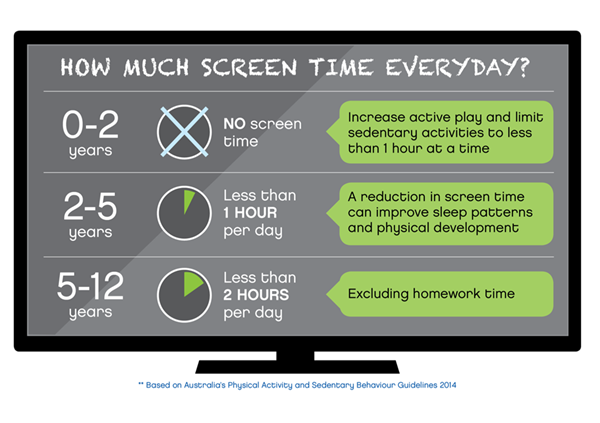
Image above was obtained from the wslhd.health.nsw.gov.au site

Set Clear Rules and Boundaries:

Establishing clear rules from the beginning is essential. Talk to your child about expectations regarding device usage, such as time limits, appropriate content, and designated device-free zones (e.g., mealtimes or bedrooms). Ensure that the rules are age-appropriate and that your child understands the reasons for these guidelines.

Use Parental Control Features:

Most devices and online platforms offer parental control features that allow you to set restrictions and monitor your child’s activities. Familiarize yourself with these tools and take advantage of features like screen time limits, content filters, and app restrictions. This helps you maintain control and create a safe digital environment for your child.

Encourage Alternative Activities:

Engage your child in a variety of activities that do not involve screens. Encourage physical exercise, creative play, reading, and social interactions. Offering alternative activities not only reduces screen time but also promotes overall development and well-being.

Lead by Example:

Be a positive role model by demonstrating healthy device usage yourself. Children are more likely to follow your lead, so limit your own screen time and prioritize face-to-face interactions. Engaging in activities together also strengthens family bonds and encourages healthy habits.

Create Tech-Free Zones and Times:

Designate specific areas in your home as “tech-free zones,” such as the dining table or bedrooms, where devices are not allowed. Additionally, establish “tech-free times,” such as a few hours before bedtime, to help your child unwind and prepare for a good night’s sleep.

Managing your child’s device usage can help create a healthier and more balanced lifestyle. By setting clear rules, using parental control features, encouraging alternative activities, leading by example, and establishing tech-free zones and times, you can take control of your child’s screen time. Remember, the goal is not to completely eliminate technology but to find a healthy balance that fosters your child’s development and well-being.

Robot Painter

Embracing the Benefits of AI: How Children Can Harness Artificial Intelligence to Their Advantage

In our rapidly evolving world, technology plays a significant role in shaping various aspects of our lives. One notable innovation is Artificial Intelligence (AI), which has the potential to revolutionize industries and transform the way we interact with technology. While AI may initially seem like a complex concept, children can harness its power to their advantage. In this blog post, we explore how children can use AI to enrich their educational experiences, enhance problem-solving skills, and foster creativity.

ChatGTP

AI-based Educational Tools:

With the rise of AI, a new generation of educational tools has emerged. AI-powered platforms and applications provide personalized learning experiences tailored to the unique needs of each child. These platforms utilize advanced algorithms to analyze individual learning patterns, deliver customized content, and adapt instructional approaches. From interactive tutoring systems to adaptive learning software, children can leverage AI to receive targeted support, address specific educational gaps, and progress at their own pace.

AI for Creative Exploration:

AI technology offers children a new realm of creative possibilities. AI-powered tools can generate unique art and music, inspiring young minds to explore their own artistic expressions. For instance, AI-based music composition software can help children compose melodies, harmonies, and rhythms, even if they lack traditional music training. Similarly, AI-powered drawing platforms and digital art tools can provide children with endless opportunities to experiment with different artistic styles and techniques.

Enhancing Problem-Solving Abilities:

Critical thinking and problem-solving skills are essential for children’s cognitive development. AI-enabled educational games and puzzles can engage children in challenging and interactive problem-solving scenarios. These games utilize AI algorithms to adapt the difficulty level based on individual performance, ensuring an appropriate level of challenge. By actively engaging in these activities, children can develop cognitive flexibility, analytical thinking, pattern recognition, and logical reasoning skills.

Virtual Assistants and Language Development:

Virtual assistants, such as Siri, Alexa, or Google Home, have become a common presence in many households. These AI-powered devices offer children a unique opportunity to develop their language and communication skills. Children can ask questions, engage in conversations, and receive instant responses from a virtual assistant, helping them expand their vocabulary, improve comprehension, and refine their conversational skills.

AI in Science and Exploration:

AI can also have a significant impact on children’s scientific exploration and discovery. AI algorithms can analyse vast amounts of data, allowing children to access and interpret information that was once inaccessible. Whether it’s exploring space, studying ecosystems, or understanding complex scientific concepts, AI-powered tools can provide children with real-time data, simulations, and visualizations, facilitating a deeper understanding of the world around them.

As AI continues to advance, children can embrace its vast potential and harness its benefits. From personalized learning experiences to fostering creativity and problem-solving abilities, AI can positively impact children’s education and personal growth. By integrating AI-driven tools and technologies into their educational journey, children can expand their horizons, develop vital skills, and prepare for a future.

IQ & EQ

Why Academic and Social Intelligence are Equally Important

In an increasingly interconnected and fast-paced world, preparing children for the future goes beyond academic success. While academic intelligence is crucial, it is equally important to foster social intelligence in children. In this blog post, we will explore why both academic and social intelligence are vital for preparing kids for the challenges and opportunities that lie ahead.

Academic Intelligence:

Academic intelligence refers to the ability to acquire knowledge, think critically, solve problems, and excel in academic pursuits. It forms the traditional foundation of education, emphasizing subjects like math, science, languages, and humanities. Strong academic skills provide a solid basis for future educational endeavours and career paths. They allow children to navigate complex subject matter, acquire relevant skills, and pursue their chosen fields. However, academic intelligence alone may not guarantee success in an increasingly interconnected and dynamic world.

Social Intelligence:

Social intelligence encompasses a range of interpersonal skills, emotional understanding, and the ability to navigate social dynamics effectively. It involves qualities like empathy, communication, collaboration, adaptability, and leadership. Social intelligence plays a crucial role in building positive relationships, resolving conflicts, and working harmoniously in diverse environments. In today's globalized society, individuals with strong social intelligence have a distinct advantage. They can communicate effectively, form meaningful connections, collaborate with others, and adapt to changing circumstances.

The Importance of a Balanced Approach:

To prepare kids for the future, it is essential to nurture both academic and social intelligence. A balanced approach ensures that children not only excel academically but also possess the necessary skills to thrive in a rapidly evolving world. By focusing solely on academic achievements, we risk neglecting the development of crucial social and emotional skills. By promoting social intelligence alongside academic excellence, we equip children with the tools they need to succeed academically, build meaningful relationships, and contribute positively to society.

As parents and educators, it is our responsibility to prepare children for a future that demands more than just academic achievements. By fostering both academic and social intelligence, we ensure that children are equipped with the skills they need to navigate an ever-changing world. By prioritizing a balanced approach, we create well-rounded individuals who excel academically, communicate effectively, collaborate successfully, and embrace the challenges and opportunities that lie ahead.

Father & Child Learning

How To Cultivate Lifelong Learning Habits In Children

Instilling the love for learning from an early age is an invaluable gift that can positively shape a child’s future. Cultivating lifelong learning habits in children goes beyond academic success; it fosters curiosity, critical thinking, and a thirst for knowledge that lasts a lifetime. In this blog post, we will explore some effective strategies to cultivate lifelong learning habits in children.

Foster a Curious Mindset:

Encourage curiosity by providing opportunities for exploration and discovery. Encourage your child to ask questions and seek answers. Engage in activities that spark their interest, such as visiting museums, conducting science experiments, or exploring nature. Support their curiosity by offering books, resources, and digital tools that expand their knowledge in areas they find intriguing.

Emphasize Learning Beyond the Classroom:

Help your child understand that learning extends beyond the walls of a classroom. Encourage them to explore their interests and pursue hobbies, such as music, art, sports, or coding. Engage in discussions about current events, science news, or historical events. Show them that learning happens in everyday life, fostering a curiosity for the world around them.

Be a Role Model:

Children often model their behaviour after their parents or caregivers. If they see you engaging in your own learning pursuits, such as reading books, taking courses, or pursuing personal interests, they are more likely to see learning as a lifelong endeavour. Share your own learning experiences and demonstrate the joy of acquiring new knowledge.

Create a Learning-Friendly Environment:

Designate a dedicated space at home as a learning area. Fill it with books, educational games, puzzles, and art supplies. Encourage reading by having a variety of books readily available. Offer a range of learning resources, such as online educational platforms or documentaries, that align with your child’s interests.

Cultivating lifelong learning habits in children is a gift that lasts a lifetime. By fostering curiosity, emphasizing learning beyond the classroom, being a role model, and creating a supportive environment, we can help our children develop a love for learning that will drive their academic success, personal growth, and continuous development. Embrace these strategies and empower your child to become a lifelong learner, ready to navigate the ever-changing world with confidence and enthusiasm.